
praise house stories
informed by LeRhonda S. Manigault-Bryant’s Talking to the Dead: Religion, Music, and Lived Memory among Gullah/Geechee Women
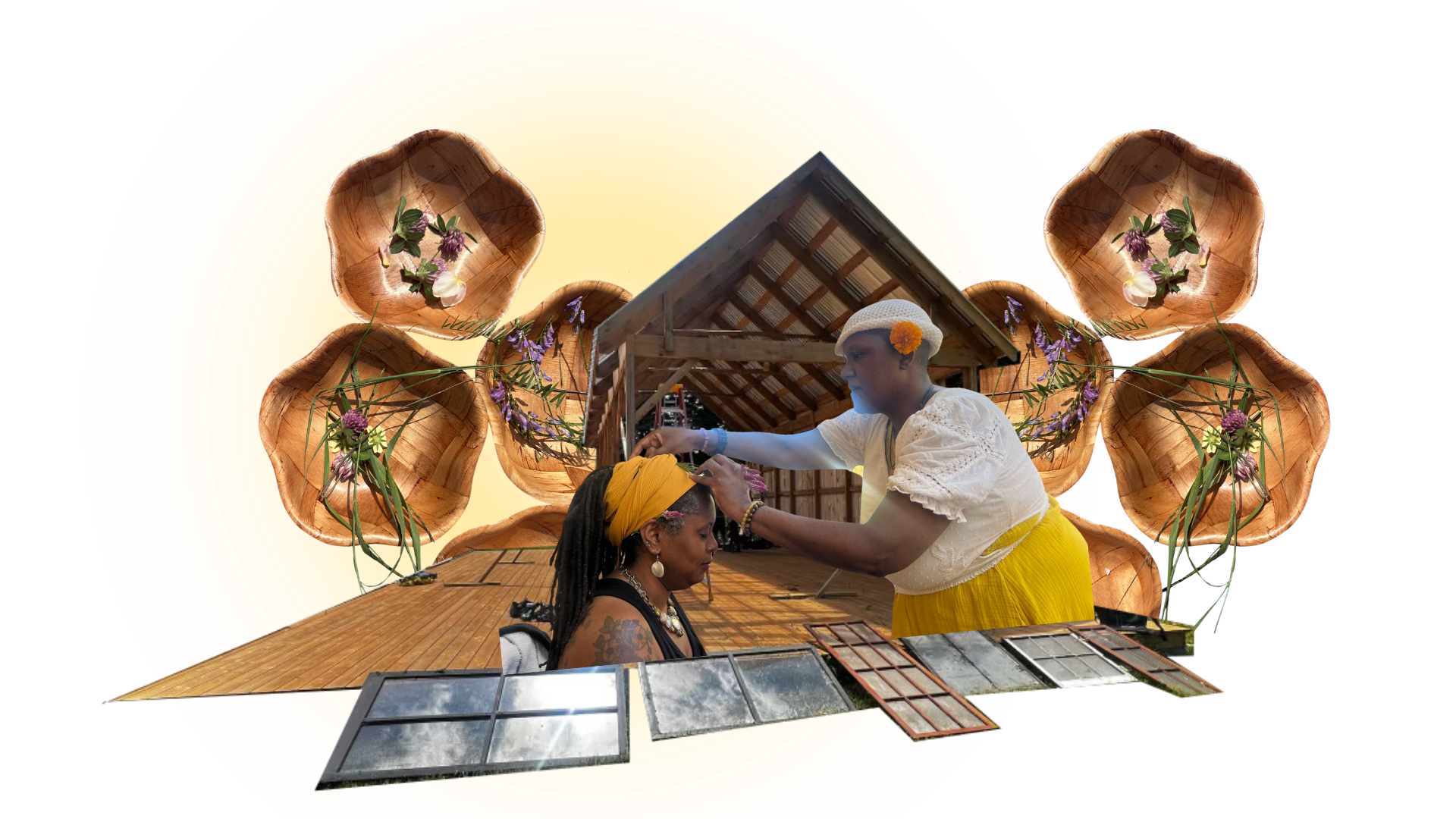
during women’s history month, studying praise houses highlights the long tradition of Black women serving as cultural historians, spiritual leaders, and guardians of community knowledge
praise houses teach us that Black women have long been cultural historians, spiritual leaders, and keepers of community memory.
“In the South Carolina lowcountry, women have historically been conjurers, praise-house leaders, worship leaders, and spiritual parents…”
— LeRhonda S. Manigault-Bryant’s Talking to the Dead, pg. 4
many histories describe praise houses as religious buildings, but in her book Talking to the Dead: Religion, Music, and Lived Memory among Gullah/Geechee Women, LeRhonda S. Manigault-Bryant also names that they were also centers of memory, healing, and communication with ancestors. the seven women she worked with describe receiving guidance from ancestors through dreams or spiritual experiences.
these encounters are understood as part of a long tradition of communication between the living and the dead. in many communities, elder women help interpret these experiences. they teach younger people how to understand dreams, maintain spiritual discipline, and respect ancestral knowledge. their authority often exists outside formal church hierarchy but plays a central role in sustaining community life.
in Gullah/Geechee communities of the coastal Carolinas and Georgia, praise houses were small wooden buildings where Black communities gathered to worship and meet. through the ring shouts our ancestors would invoke full bodied prayer, stomping & shouting on the wooden floors creating a collective drum that would activate our asé, our power, to re-member who we are and where we come from to never forget our freedom.
they were also centers of memory, healing, and communication with ancestors.
“The interconnectedness of rhythmic practices… connecting with past traditions, present experiences, and God, denotes a spiritual bond that is simultaneously ancestral, communal, and divine.”
— LeRhonda S. Manigault-Bryant’s Talking to the Dead, pg. 154
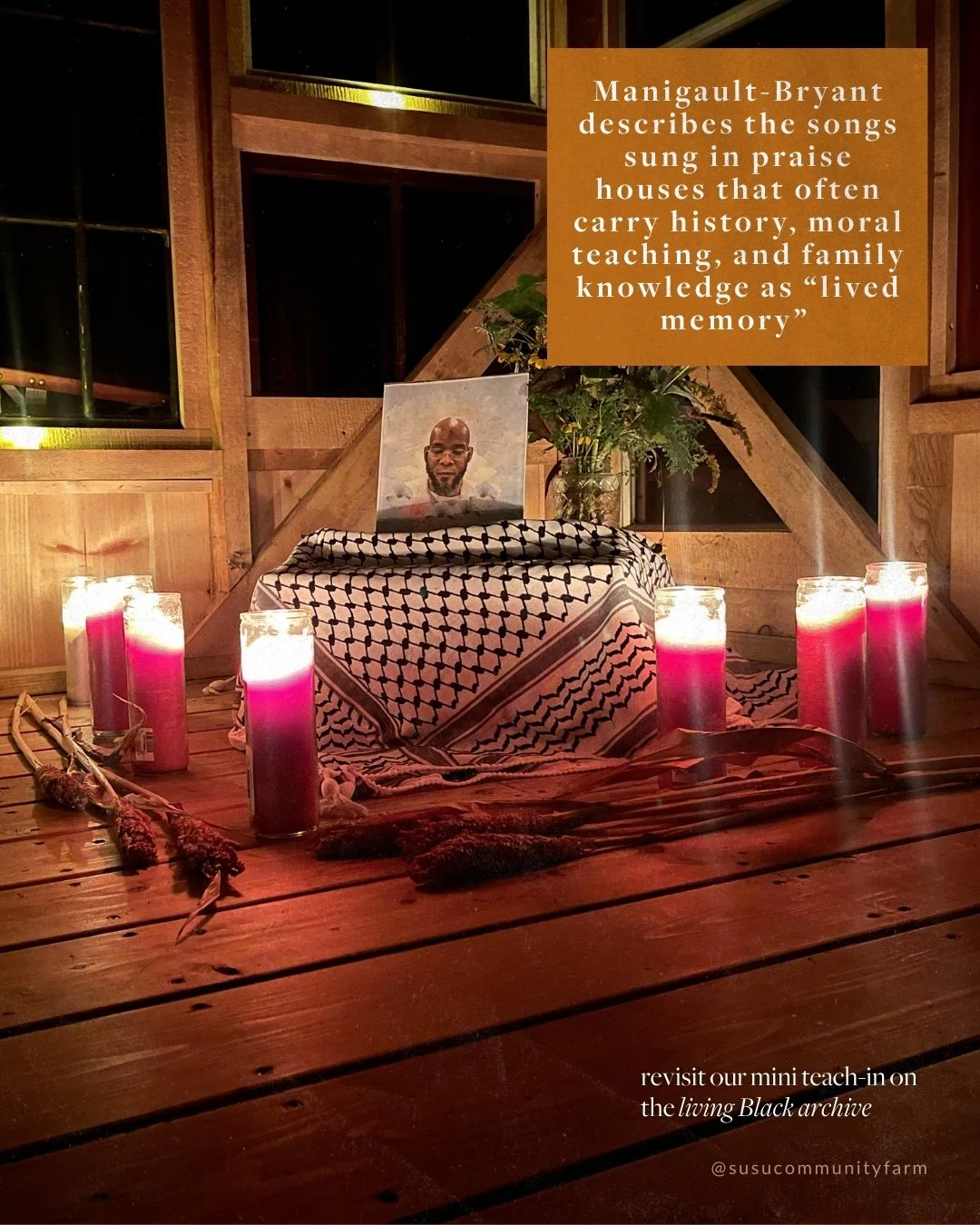
in praise houses, Gullah/Geechee women guide prayer meetings, teach songs, interpret spiritual signs, and maintain relationships with ancestors. they interpret dreams, visions, and spiritual experiences as guidance from ancestors. they use song and storytelling as a way to keep memory alive. Manigault-Bryant describes the songs sung in praise houses that often carry history, moral teaching, and family knowledge as “lived memory.”
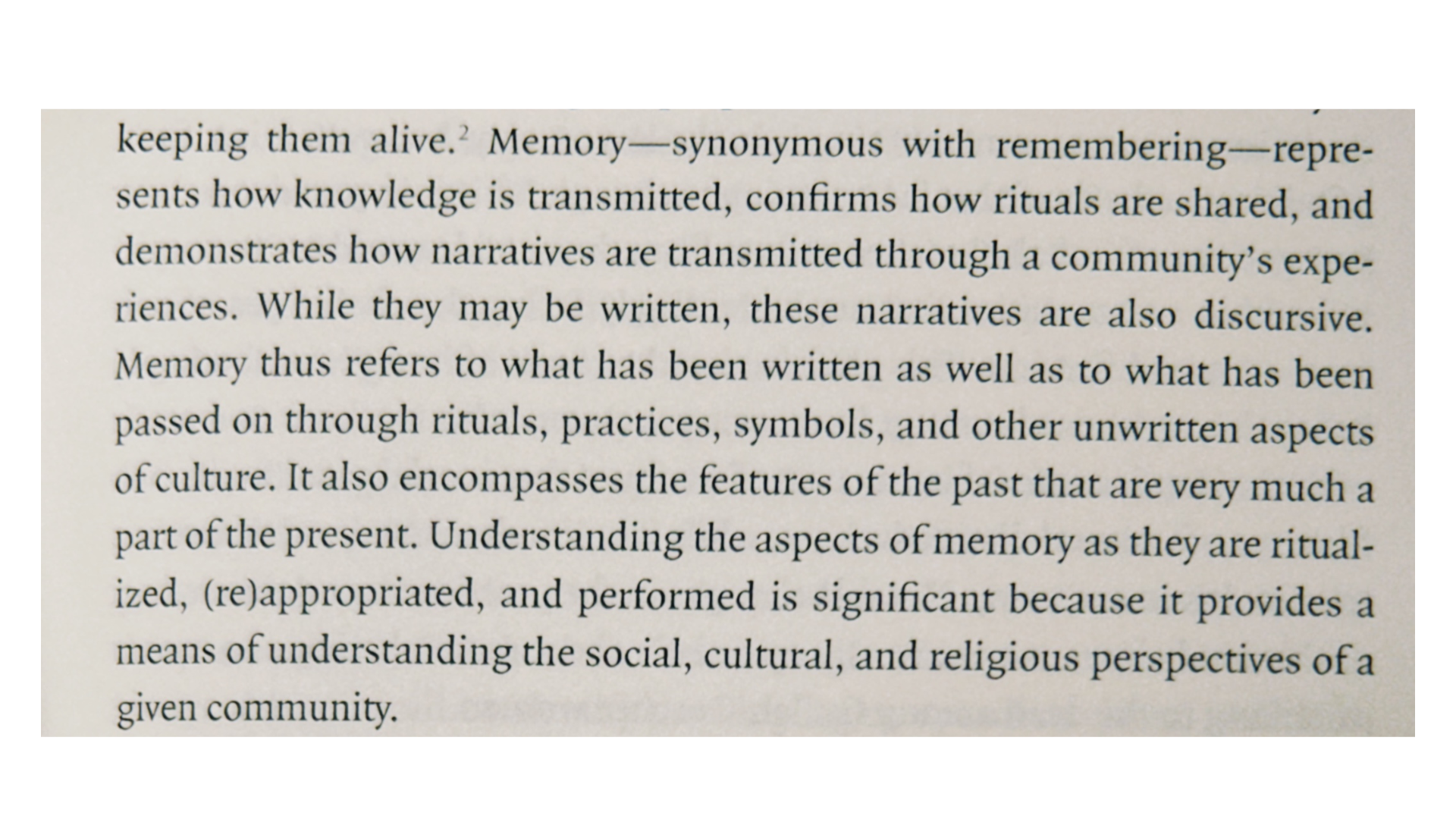
“Memory… represents how knowledge is transmitted, confirms how rituals are shared, and demonstrates how narratives are transmitted through a community’s experiences.”
— LeRhonda S. Manigault-Bryant’s Talking to the Dead, pg. 173
elder Black women serve as interpreters of these experiences, helping younger people understand dreams, spiritual callings, and ancestral messages.
over the past few years we have been constructing a praise house here on the land at SUSU. it will be a space for us to reclaim our fugitivity, to reclaim our stories, our medicines, our bodies, to be in community with one another, and to find homeplace.
in 2026, SUSU will start opening the praise house for healing retreats, ceremony, ritual, and to share space to continue on the traditions of our ancestors
reflection:
how do dreams, spiritual callings, and ancestral messages move through your body and show up in your daily practices?
please consider selecting “show my support by making this a recurring donation.”